
Protect flow without hiding risk
Potential obstructions become managed operator tasks rather than unpredictable pick failures.
ROBOTIC PICK SAFETY | PALLET VISION
A downward-looking camera identifies the visual structure expected between packages. When a loose cardboard sheet hides that structure, the system can hold the pick and route the exception to an operator.
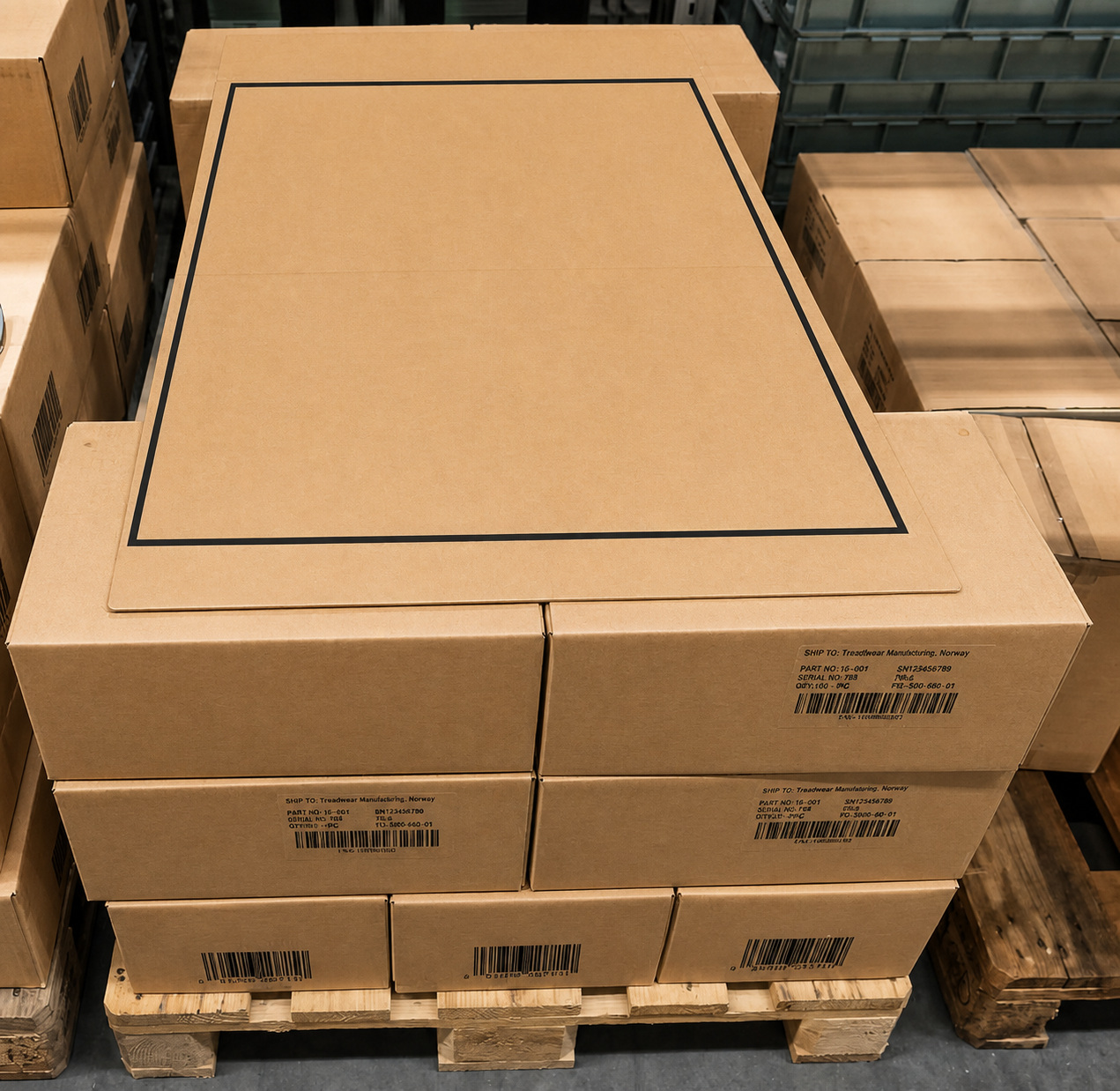
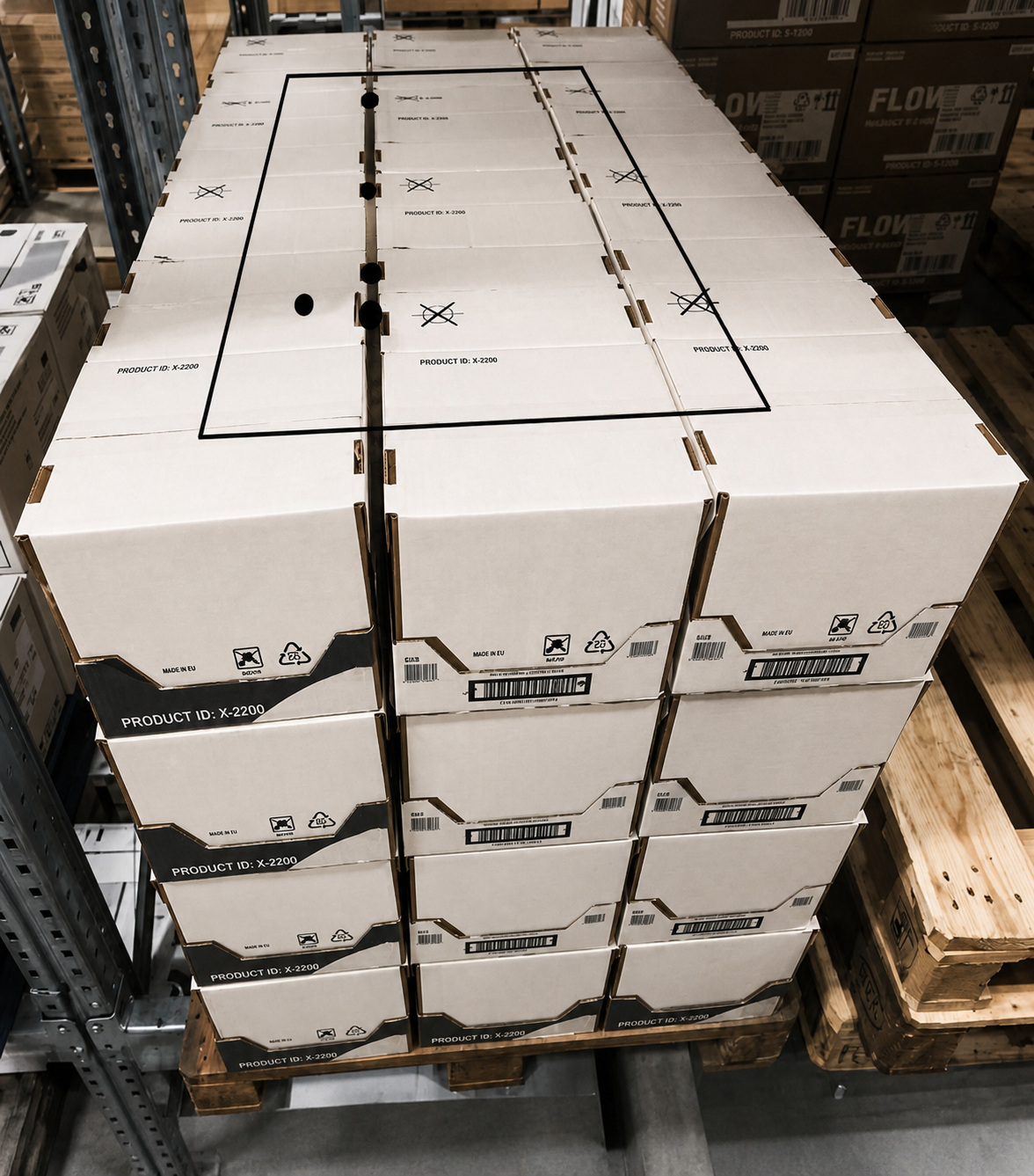
A loose separator can look harmless to a person but change what a vacuum gripper lifts. This project inserts a practical visual gate between pallet perception and robot motion.
Potential obstructions become managed operator tasks rather than unpredictable pick failures.
The product exposes a clear hold-or-continue signal and supporting image evidence for supervision.
Camera rectification, targeted preprocessing and PCA-based image analysis distinguish expected gaps from a covered surface.
Rectification gives the analysis a consistent view of the pallet surface.
The workflow evaluates visual variation and the package gaps that should remain visible.
A clear surface allows the sequence to proceed; a suspected sheet triggers a controlled hold.
The available project material supports the decision design and production-oriented workflow, but not an independently audited universal accuracy claim. Acceptance testing should cover real separator materials, package layouts, shadows, glare, partial sheets and the business cost of each false decision.
Next step
Tell us what the process must decide reliably, and we will reply with the measurement we would make first.