
Inspect the right component first
Direct attention to localized structural evidence instead of searching every pallet surface equally.
STRUCTURAL QUALITY | HYBRID DEFECT VISION
Product goal: localize crack paths on pallet components with a learned mask model and an interpretable ridge-analysis path, then relate defect extent to component context for maintenance triage.
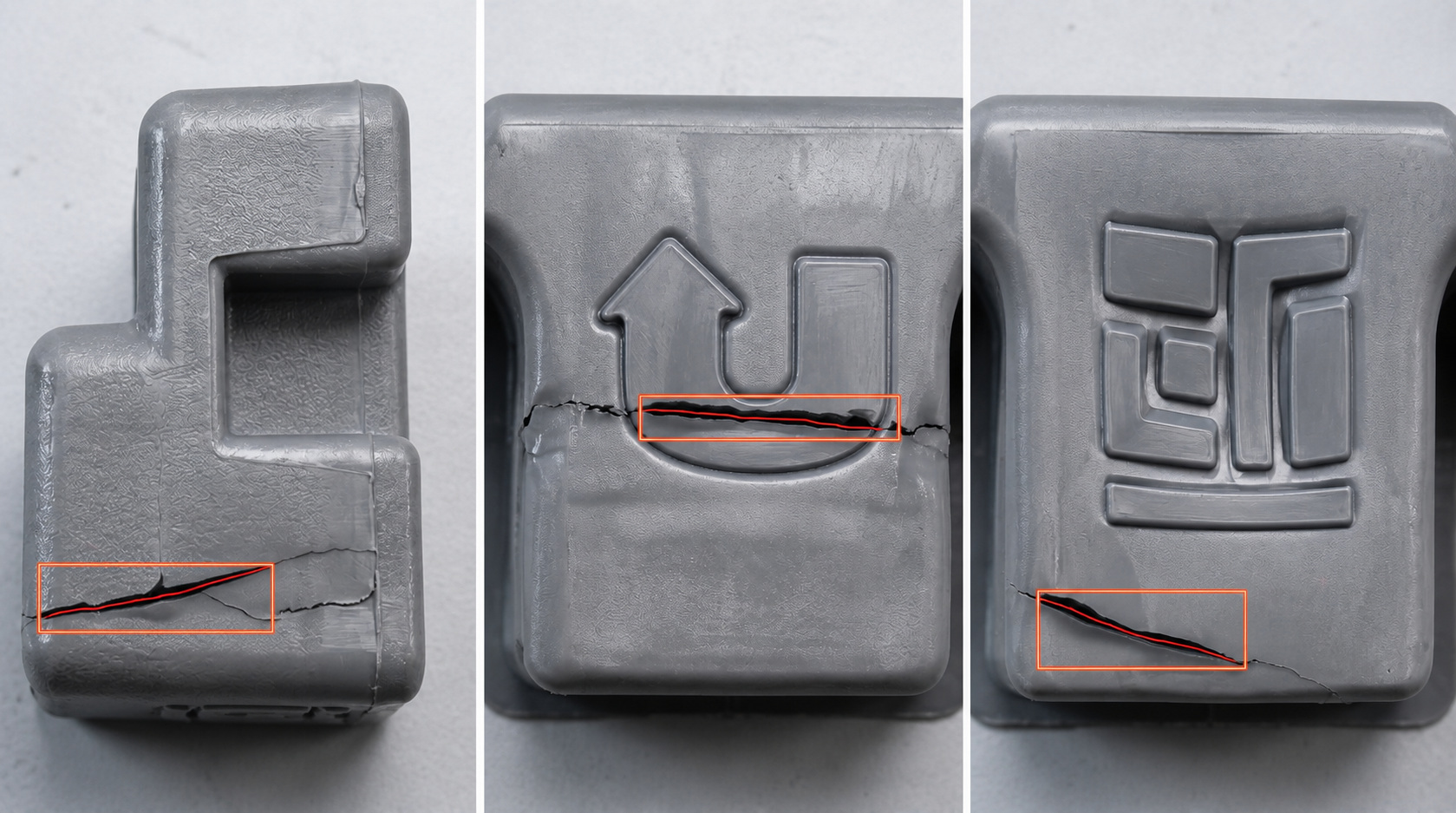
A crack label alone does not tell a maintenance team where the defect lies or how much structure it affects. Localized masks support prioritization, review and trend analysis while leaving the final threshold aligned with asset policy.
Direct attention to localized structural evidence instead of searching every pallet surface equally.
Combine defect area, path continuity and component role into review or maintenance rules.
Mask R-CNN/D2Go experiments handle variable appearance; Hessian-based ridge analysis tests line-like crack evidence directly.
Use known part/surface context, contrast preparation and augmentation to represent realistic crack appearance.
A learned instance mask identifies the defect region while ridge responses expose thin, elongated line structure.
Filter implausible regions and provide mask, path evidence and component-relative extent to disposition policy.
The repository shows training, verification and classical ridge analysis, but no independent fleet-wide acceptance result. Deployment thresholds should cover fine and open cracks, seams, scratches, shadows and the different cost of missed versus false alarms.
Next step
Tell us what the process must decide reliably, and we will reply with the measurement we would make first.