
Route recognized assets consistently
Use evidence from whichever label-bearing side is visible and escalate unreadable cases instead of guessing.
ASSET IDENTITY | KNOWN-LABEL PERCEPTION
Product goal: detect and classify known pallet label regions across multiple camera views, preserve the crop and confidence as evidence, and provide a trustworthy input to pallet-family routing.
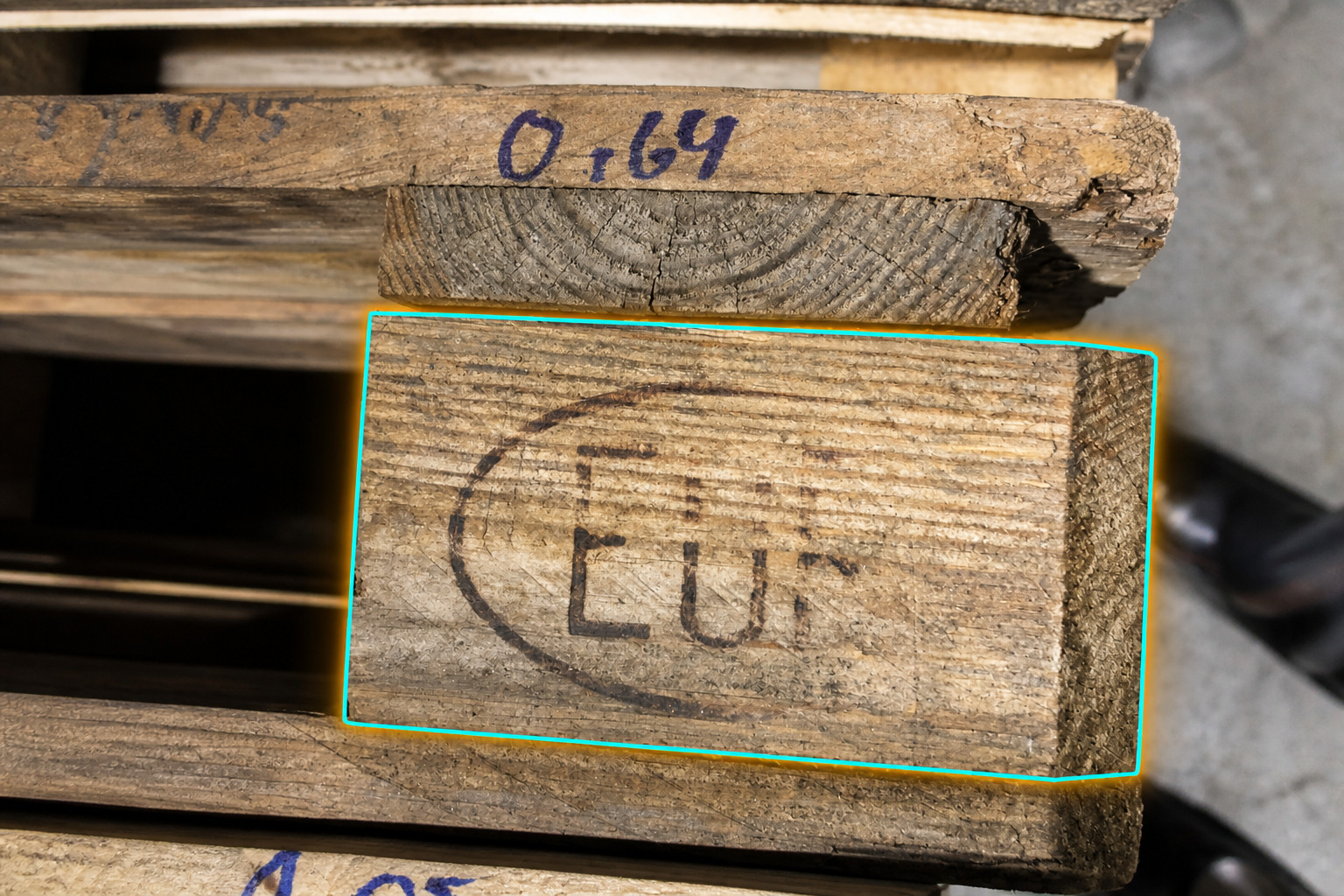
Known labels provide a more explainable anchor than color or geometry alone. The product can support asset routing, pool handling and exception review while keeping recognition separate from the business rules that consume it.
Use evidence from whichever label-bearing side is visible and escalate unreadable cases instead of guessing.
A stable label-evidence interface can serve multiple type, ownership and workflow decisions.
Mask-based models focus on the identity area, reducing distraction from pallet structure, wear and background clutter.
Standardize scale and contrast while retaining the texture and shape needed to recognize worn markings.
Instance masks or polygons isolate candidate labels and attach a known class and confidence.
Return crop, region, class, view and score; reject low-quality or conflicting evidence for controlled review.
The source contains extensive imagery, label annotations and trained artifacts, but no single site-independent result. Acceptance should cover wear, fading, shadow, partial labels and rare classes, then measure downstream pallet-type agreement.
Next step
Tell us what the process must decide reliably, and we will reply with the measurement we would make first.