
Reduce failures caused by unreliable sensing
Treat data quality as an operating capability, not a hidden preprocessing detail.
3D PERCEPTION | POINT-CLOUD QUALITY
Reflective wrapping, barriers and distant structures can dominate an industrial scan. This project learns the spatial signature of useful package points and separates it from interference before downstream localisation or picking.
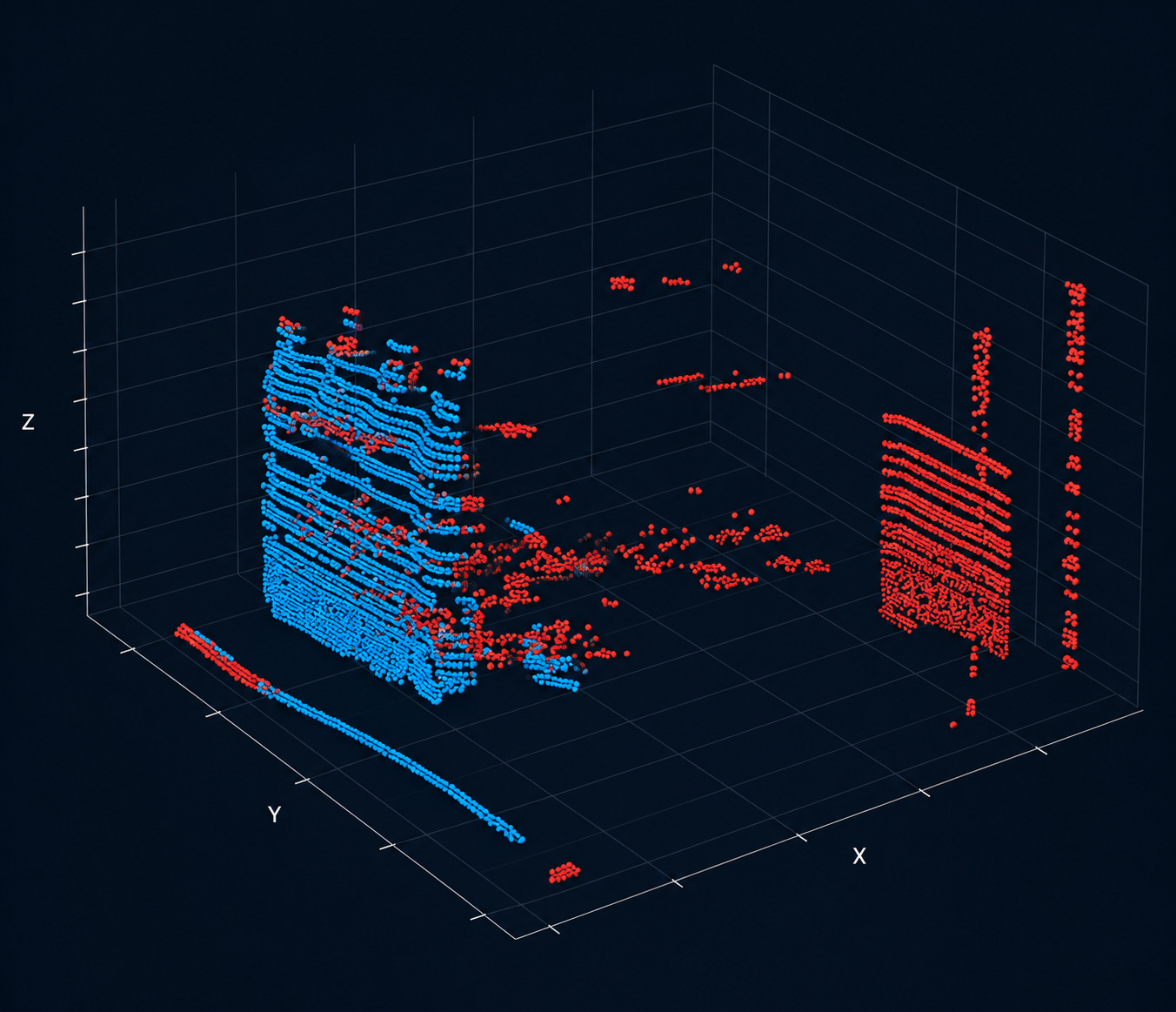
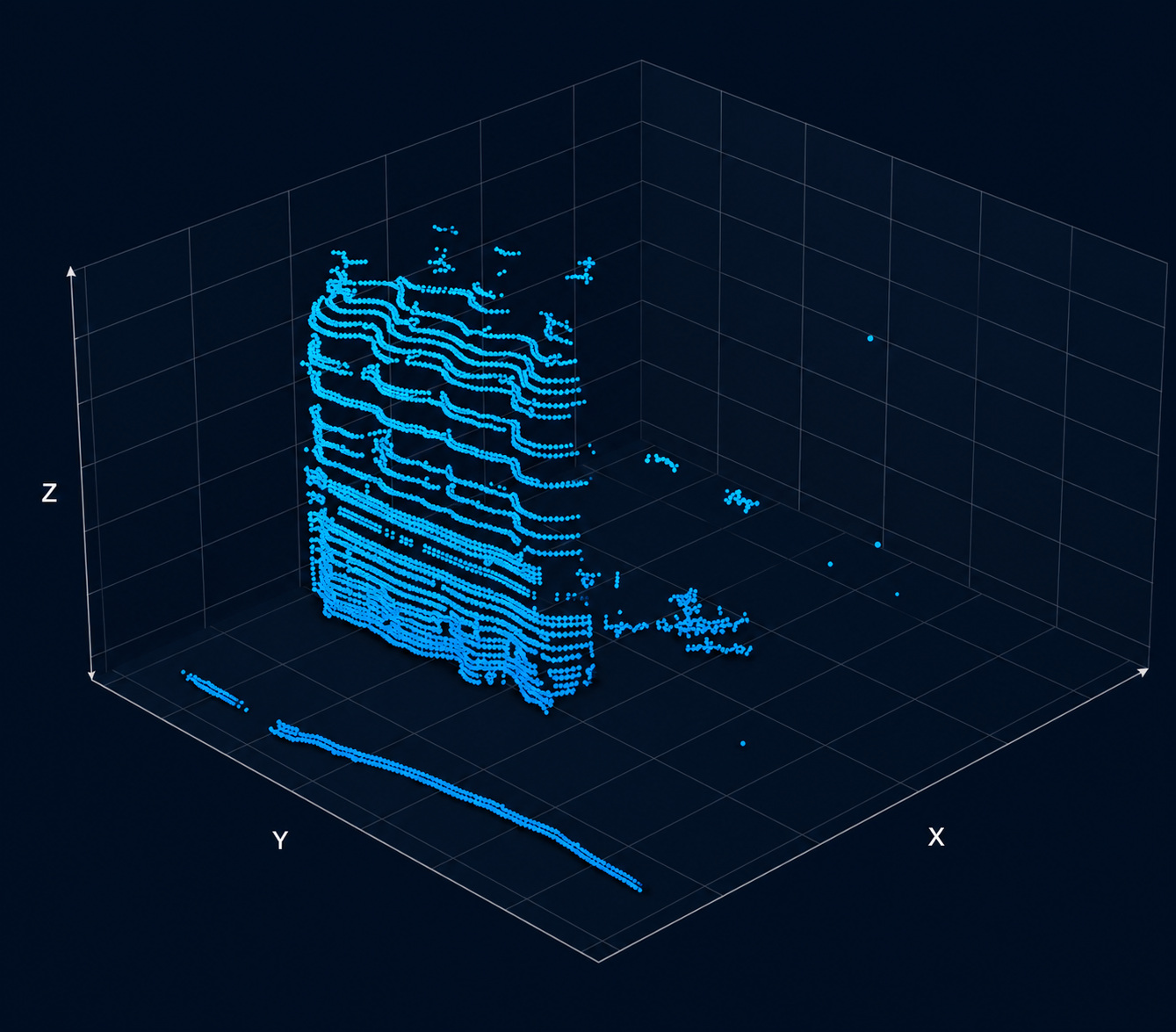
A robot planner cannot compensate for a cloud filled with reflections and background structures. Cleaning the signal upstream protects every localisation, grasp and inspection stage that follows.
Treat data quality as an operating capability, not a hidden preprocessing detail.
The filter can sit between scanning hardware and multiple 3D applications.
Spatial location, local surface direction, neighborhood density and cluster structure provide explainable filtering signals.
The source work demonstrates paired point classification and filtering, but not a universal deployment score. Acceptance should reflect the target scanner, package materials and downstream task.
Next step
Tell us what the process must decide reliably, and we will reply with the measurement we would make first.